Company News
2027 Food Trends: Five Trends Set to Shape the Food Industry
The food industry is constantly evolving, with changing consumer tastes, new product innovations and influences from around the world shaping...

Company News
The food industry is constantly evolving, with changing consumer tastes, new product innovations and influences from around the world shaping what people want to eat. As we look ahead to 2027, there are some exciting developments on the horizon for restaurants, cafés, pubs, hotels and the wider hospitality sector.
From the growing popularity of South-East Asian cuisine to reinvented comfort foods and more nutritious small plates, the food trends for 2027 suggest that customers are looking for something new, but without losing sight of the flavours and dishes they already love.
For chefs and foodservice businesses, understanding these emerging trends presents an opportunity to refresh menus, introduce exciting ingredients and give customers more reasons to visit.
Here are five food trends to look out for in 2027.
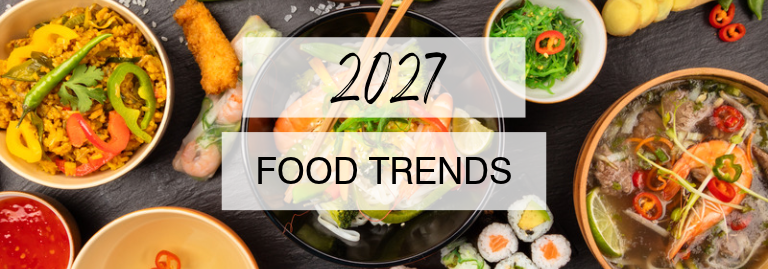
Global flavours will continue to influence menus in 2027, with South-East Asian cuisine expected to attract even more attention.
While Korean, Japanese and Chinese-inspired dishes have already established themselves as popular choices in the UK, there is growing opportunity to explore cuisines from countries including Vietnam, Thailand, the Philippines, Indonesia and Malaysia.
These cuisines offer an exciting combination of fresh ingredients, aromatic herbs, bold spices, contrasting textures and vibrant flavours.
Think Vietnamese-inspired dishes featuring fresh herbs, lime and chilli, Malaysian-style curries, Indonesian satay, Filipino-inspired marinades and Thai dishes balancing sweet, sour, salty and spicy flavours.
Traditional cooking methods and authentic techniques will also play an important role. Fermentation, in particular, offers opportunities to introduce deeper flavours and distinctive ingredients into everyday dishes.
How can chefs incorporate this trend?
You don’t necessarily need to overhaul your menu to introduce South-East Asian influences. Consider:
The key is to introduce exciting flavours in accessible ways, giving customers the opportunity to try something different.
Food technology is opening up new possibilities for familiar ingredients, and 2027 could see more products developed to improve the taste, texture, appearance and nutritional value of everyday foods.
Scientific methods are increasingly being used to enhance the characteristics of food, helping manufacturers address some of the limitations associated with existing products.
Examples of the types of innovation emerging include non-melting ice cream, dairy-free cheese that melts and stretches more effectively, and vegetables enhanced with additional vitamins.
These developments could make a significant difference to both consumers and foodservice operators.
For example, better-performing dairy-free cheese could make plant-based pizzas and other dishes more appealing, while improved product textures could help chefs deliver more consistent results.
Nutritionally enhanced ingredients also offer opportunities to introduce additional nutritional value without dramatically changing familiar foods.
What could this mean for foodservice businesses?
For chefs, product innovation isn’t just about novelty. It’s about finding ingredients that perform better, offer greater versatility and help meet changing customer expectations.
Keep an eye out for new product launches and improvements to familiar ingredients. Sometimes the biggest menu opportunities come from using an existing favourite in a better way.
Customers still love familiar, comforting food, but increasingly want to see it presented in new and interesting ways.
One of the most exciting food trends for 2027 is the reinvention of classic dishes, combining recognisable flavours with unexpected formats, ingredients or combinations.
Think cheeseburger pizzas, pizza-inspired hot dogs, cheeseburger meatballs and familiar dishes reimagined in completely different ways.
The appeal is simple: customers know what they like, but they are also looking for something interesting enough to try, photograph and share.
For restaurants, this presents an opportunity to create eye-catching specials without necessarily introducing a completely unfamiliar style of cooking.
Ideas for bringing familiar favourites back to life:
The possibilities are endless, and many of these ideas can be created using ingredients already found in a professional kitchen.
For operators, the opportunity is to make small changes to familiar dishes that create something customers perceive as new and exciting, without adding unnecessary complexity or cost to the kitchen.
Smaller plates are expected to remain an important feature of menus in 2027, influenced in part by changing eating habits and the continued popularity of GLP-1 weight-management medications.
However, smaller portions don’t mean customers want to compromise on satisfaction.
There is an increasing focus on getting more from every bite, with protein, fibre and other valuable nutrients playing an important role in smaller, more considered dishes.
For hospitality businesses, this creates opportunities to develop smaller plates that are filling, flavourful and nutritionally balanced.
Rather than simply reducing portion sizes, chefs can think about how to pack more flavour, texture and substance into each dish.
Ideas for better small plates include:
This trend also works well for restaurants looking to offer more flexible dining experiences, allowing customers to choose several smaller dishes rather than committing to a traditional starter and main course.
The opportunity is to make smaller dishes feel like a complete experience in their own right, rather than simply a smaller version of a main meal.
Children’s menus are another area where we could see significant changes in 2027.
Children are increasingly exposed to different cuisines and food cultures through social media, family experiences and wider food trends. As a result, many are becoming more adventurous and developing stronger opinions about what they want to eat.
The traditional children’s menu, often limited to a handful of familiar options, presents an opportunity for improvement.
One approach is to introduce more choice and interaction, allowing children to become involved in putting their meals together.
For example, rather than serving a standard burger, restaurants could offer a build-your-own burger experience, with children choosing their own toppings and assembling their meal at the table.
Other ideas include:
Making meals interactive can help create a more enjoyable experience for children and families, while giving restaurants the opportunity to offer something different from the usual children’s menu.
For operators, the best approach is to combine familiar favourites with opportunities to explore new flavours, keeping dishes appealing, manageable and cost-effective.
The common theme running through these food trends is that customers want more from their food.
They still value familiar flavours, but they are increasingly interested in new combinations, global influences, better ingredients and more personalised dining experiences.
For chefs and hospitality operators, the challenge is finding ways to respond to these changing expectations while keeping menus commercially viable and kitchens running efficiently.
You don’t need to completely redesign your menu to take advantage of emerging food trends. Introducing a handful of new ingredients, refreshing existing dishes or experimenting with a few seasonal specials can be enough to keep your offering interesting.
At Trevors Foodservice, we supply thousands of products to restaurants, pubs, hotels, cafés and catering businesses across the North West and beyond. With an extensive range of frozen, chilled, ambient and non-food products, we’re here to help customers discover new ingredients, explore menu ideas and make the most of emerging food trends.
Looking for inspiration for your next menu? Speak to the Trevors team about new products, ingredients and ideas to help keep your menu ahead of the curve.